The Death of 'Press 1 for Support' – How AI is Changing Business Calls
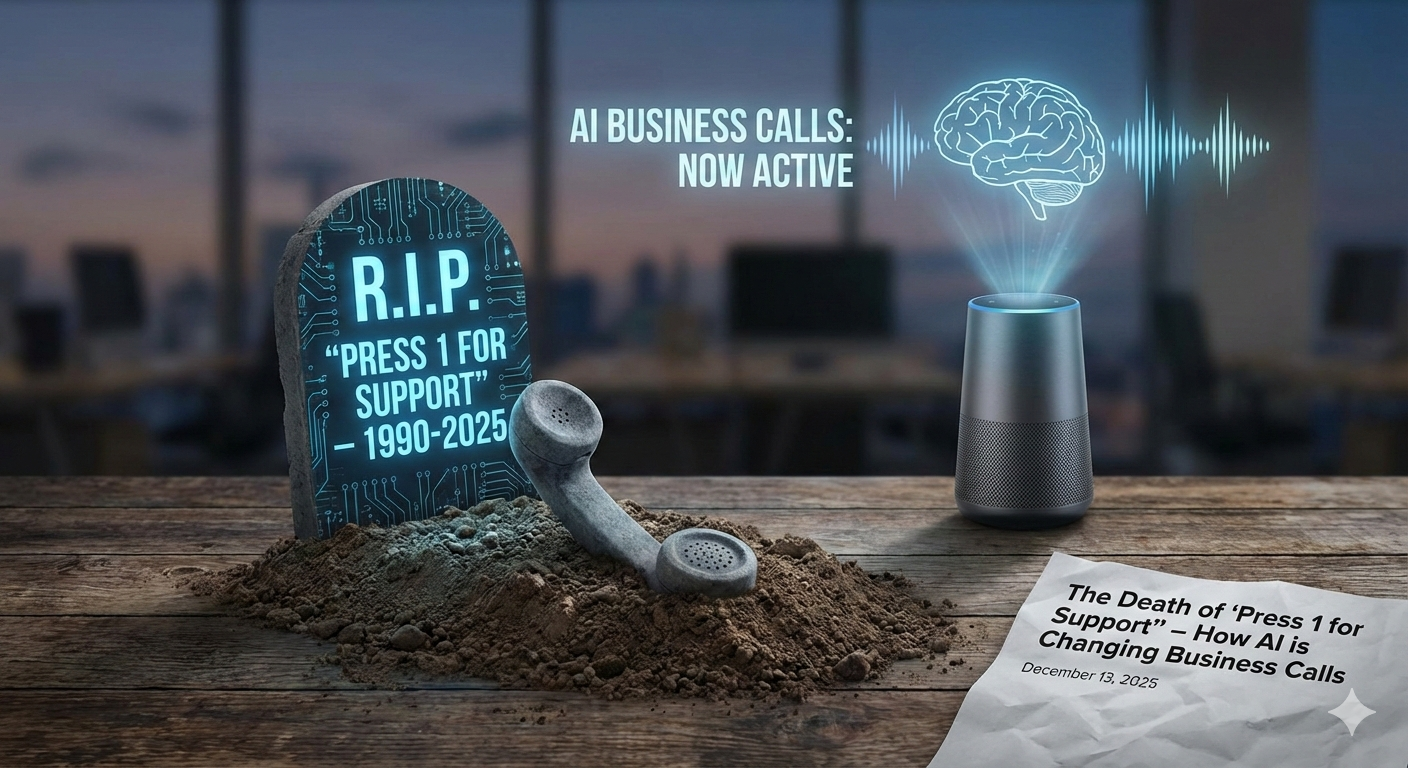
We’ve all been there. You call a company, and you’re greeted by that robotic voice: “Press 1 for Sales. Press 2 for Support. Press 3 to listen to these options again.” Then you press 2, and there’s another menu. And another. By the time you reach a human, you’ve forgotten why you called.
That experience is finally dying. And honestly? Good riddance.
What’s Actually Changing
Here’s the short version: AI got good enough that businesses are ripping out those old phone menu systems.
Instead of navigating a maze of numbered options, you just… talk. Say what you need. The AI figures out where to route you, or in many cases, handles the issue itself.
This isn’t some far-off future thing. According to recent industry data, over 60% of organizations are expected to have AI-driven voice tools in place by the end of 2025. And nearly 80% of customer experience leaders say this tech is creating a fundamentally different (and better) way of handling calls.
Why Now?
AI voice technology has been “coming soon” for a decade. So what changed?
A few things clicked into place:
The AI actually works now. Modern voice AI can understand accents, detect emotions, switch languages mid-conversation, and handle context in ways that were impossible three years ago. You can speak naturally instead of carefully pronouncing keywords.
Costs dropped dramatically. Running sophisticated AI used to require expensive infrastructure. Cloud computing and more efficient models made it accessible to businesses that aren’t Fortune 500 companies.
People got used to it. Siri, Alexa, Google Assistant—we’ve been training ourselves to talk to AI for years. The weird factor is gone.
The Business Case is Hard to Ignore
Let’s talk numbers, because that’s what actually drives adoption.
Companies using AI-powered voice systems are reporting 20-30% reductions in operational costs. One large telecom cut their call handling time by 35%. Customer satisfaction often goes up, not down—turns out people prefer getting answers quickly to navigating phone trees.
For smaller businesses, this is arguably more impactful. You don’t need a full call center to handle customer inquiries professionally. An AI voice system can manage basic questions, schedule appointments, take messages, and only escalate to humans when necessary.
That’s a game-changer if you’re running a growing company with limited staff.
What These Systems Actually Do
Modern AI voice agents aren’t just fancy answering machines. They can:
- Understand intent: You say “I want to cancel my subscription” and it knows what that means, even if you phrase it differently each time
- Connect to your actual systems: They integrate with CRMs like Salesforce, HubSpot, and Zoho, so they can actually look up your account and give real answers
- Handle multiple languages: Not just translation, but understanding local expressions and switching languages naturally
- Detect emotions: If you’re frustrated, the system can recognize that and adjust its approach or escalate to a human faster
The gap between these systems and a real human is shrinking fast. Not gone—but shrinking.
The Honest Downsides
This isn’t all upside. A few things to consider:
Complex issues still need humans. AI is great for routine stuff. But if your problem is weird or requires judgment calls, you still want a person. Smart implementations know this and hand off appropriately.
Setup isn’t trivial. Getting these systems right requires thought about your specific workflows. It’s not plug-and-play, despite what some vendors claim.
Some customers hate it on principle. There’s a segment of callers who want a human immediately, period. You need an easy escape hatch for them.
Quality varies wildly. The difference between a well-implemented AI voice system and a bad one is enormous. Bad ones are arguably worse than the old phone menus.
Where This is Headed
The voice AI market is growing at around 35% annually. By 2026, about 80% of businesses plan to use AI-driven voice technology in some form.
What’s interesting is where the money is flowing. Healthcare is seeing massive growth (37% annual growth through 2030). Sales and customer support are obvious use cases. But there’s also growing adoption in training—realistic voice AI that can simulate customer interactions for employee coaching.
The startup world is betting heavily on this too. Voice AI companies made up 22% of the most recent Y Combinator class. That’s a lot of smart people thinking this space has room to run.
What This Means for You
If you’re running a business, the question isn’t really “if” anymore—it’s “when and how.”
The technology works. The costs are reasonable. Customer expectations are shifting toward faster, more natural interactions.
That doesn’t mean you need to rush out and overhaul everything tomorrow. But it’s worth paying attention to. The companies that figure out how to use voice AI well are going to have a real advantage over those still making customers press 1 for sales.
And honestly, your customers will thank you for not making them listen to hold music for 20 minutes.